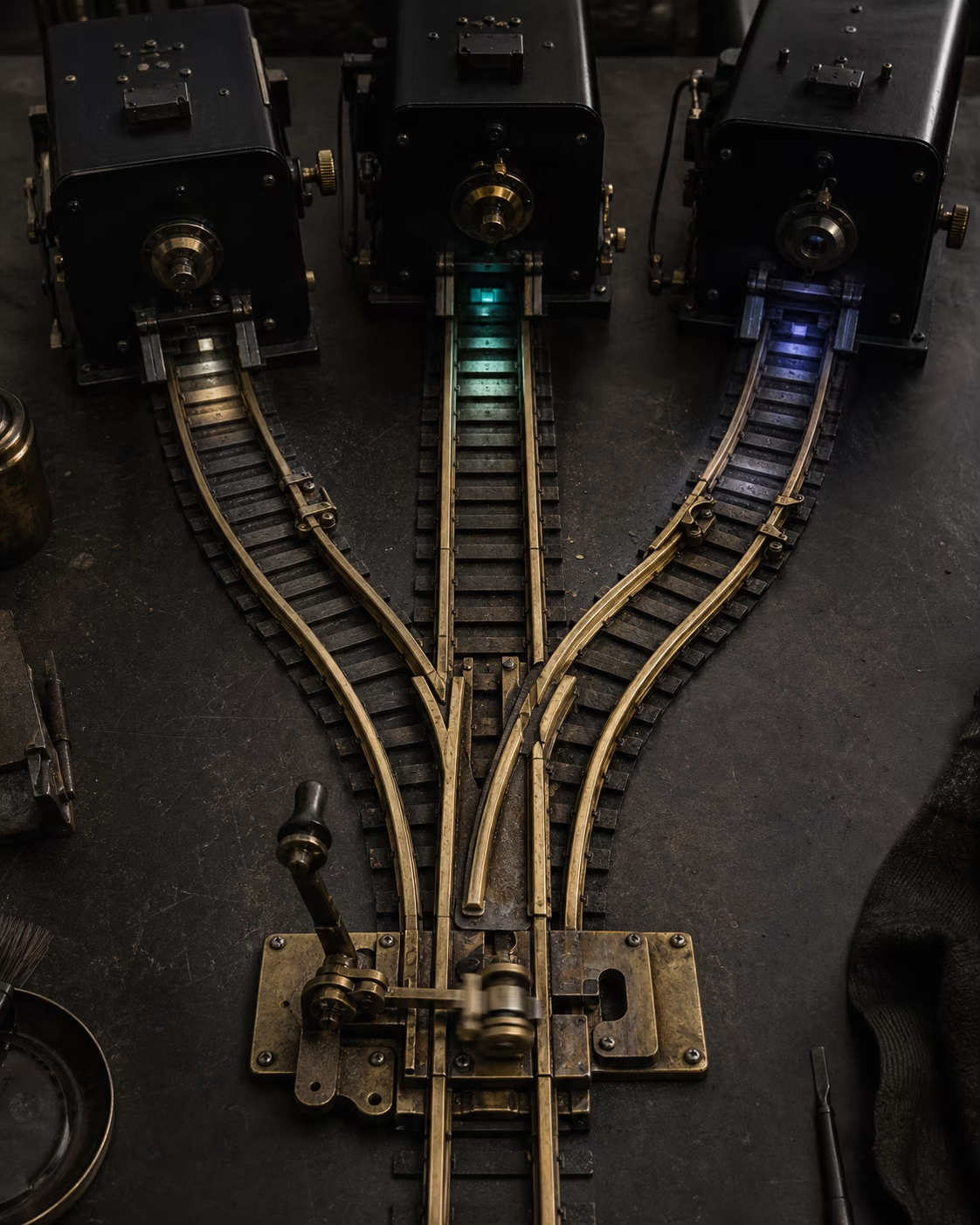
A Route Around the Model
Anthropic’s status page records elevated errors across all models on 29 July and across many models on 30 July. In the week that followed, practitioner groups filled with reports that the flagship model had been quietly downgraded and that scheduled jobs were misfiring. One member found the same model noticeably better on his workloads. None of it could be proved in either direction because none of the reports came with a benchmark. Dependence on one vendor gives you the outage and no clean way to tell whether the service has changed.
No operations manager would wire a plant to one power line and call the matter settled. The line is somebody else’s asset, maintained and priced at somebody else’s discretion, so you keep a generator and test it. Most organisations have wired their AI the other way. The working knowledge sits in one vendor’s formats, and there is no tested route anywhere else.
Electricity at least fails loudly. A model can degrade quietly, with lazier output or more frequent refusals, and you may not know whether the change is in the service or in your own judgement. An operation that cannot tell whether a core capability got worse has already lost control of something, whatever the explanation turns out to be.
The exposure is larger than it was a year ago because the work has moved. When AI was a chat window, an outage cost convenience. Once agents run scheduled jobs and act in the operation, an outage stops work. A quiet degradation is worse because the work carries on, slightly wrong, at machine speed.
The response is smaller than a platform programme.
Keep a second route and exercise it. If the work runs on Claude, keep a GPT or Gemini route warm by running a real workload through it on a schedule. The comparison then exists before you need it. A fallback you have never run is a rumour.
Route by the shape of the work. Code-shaped tasks and judgement-shaped tasks favour different models, and the ranking can change with a release. A team that can move work between routes treats that reshuffle as an operating change rather than a crisis.
Own the substrate. Keep the instructions, working knowledge and standards in plain text that you control, behind a gateway that can point the same work at another model. LiteLLM is one route if you want to run that gateway yourself; OpenRouter is another if you do not. Our own delivery pipeline uses three model families behind one set of plain-text instructions.
The objection is cost, and it is real. A second contract and the standing chore of exercising a route consume money and attention. Price that against the week just gone, with a two-day outage followed by five days of arguing about whether the model was still any good.
The test is small enough to run this week. Pick the AI-dependent workflow that would hurt most if it stopped and run it once on the second-choice model, keeping the output for comparison. If there is no second choice and no way to move the work, the single point of failure sits inside the operating design.
Trueform works with operational and technology teams to choose where AI belongs, build the change and produce the evidence needed to use it in real work.